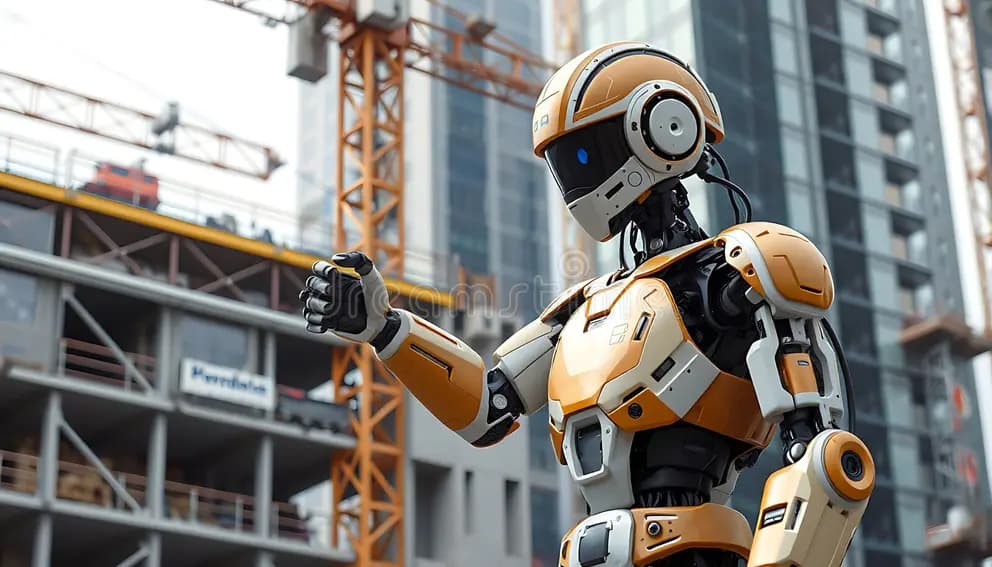
Construction is one of the last major industries to embrace automation. Labor shortages, rising costs, and safety concerns are finally driving adoption of construction robots. Chinese companies — particularly Bright Dream Robotics (Bozhilin) and WinSun — lead the world in deploying robots on construction sites.
This guide covers the types of construction robots available today, what they cost, and how to evaluate them for your projects.
Types of Construction Robots
1. Wall Painting Robots
Automatic interior wall painting is the most commercially mature construction robot application. These robots spray paint walls 3-5x faster than manual labor with more consistent coverage.
Key player: Bozhilin Wall Painting Robot ($25,000 - $45,000)
Best for: Large residential projects, commercial interiors, hotel renovations
2. Plastering Robots
Plastering robots apply plaster or mortar to walls with consistent thickness, reducing material waste by 20% and improving finish quality.
Key player: Bozhilin Plastering Robot ($35,000 - $60,000)
Best for: High-rise residential construction, large commercial buildings
3. Bricklaying Robots
Bricklaying robots automate one of construction's most physically demanding tasks, laying bricks with precise mortar application.
Key player: Bozhilin Bricklaying Robot ($40,000 - $75,000)
Best for: Large-scale residential projects with repetitive wall patterns
4. 3D Construction Printers
3D printing robots build entire building structures layer by layer using special concrete mixtures.
Key player: WinSun 3D Construction Printer ($150,000 - $500,000)
Best for: Affordable housing, disaster relief shelters, architectural innovation
5. Surveying Robots
Automated surveying projects building plans onto floors and walls with millimeter accuracy.
Key player: Topband Surveying Robot ($20,000 - $40,000)
Best for: Large commercial projects requiring precise layout
Cost & ROI by Application
| Application | Robot Cost | Labor Replaced | Payback Period |
|---|---|---|---|
| Wall painting | $25K - $45K | 3-5 painters | 4-8 months |
| Plastering | $35K - $60K | 2-4 plasterers | 6-12 months |
| Bricklaying | $40K - $75K | 2-3 masons | 8-14 months |
| 3D printing | $150K - $500K | Entire building crew | Project-dependent |
| Surveying | $20K - $40K | 2 surveyors | 6-10 months |
Wall painting robots offer the fastest ROI, making them the best starting point for construction companies new to robotics.
The WinSun 3D Printing Story
WinSun (Yingchuang) has captured global attention with projects including:
- A 5-story apartment building printed on-site
- 10 houses printed in 24 hours
- A 1,100 sqm office building in Dubai
- Affordable housing projects in rural China
The technology works by extruding layers of a special concrete mixture (containing recycled construction waste) through a large gantry-mounted nozzle. A single printer can produce the structural components of a house in 24-48 hours at roughly 30-50% of traditional construction cost.
Challenges: Building code compliance varies by jurisdiction, special concrete mixtures are required, and the technology is best suited for simple geometric structures.
Current Limitations
Construction robotics is still in its early stages. Important limitations to understand:
- Most robots handle specific tasks — there's no single robot that does everything. You need different machines for painting, plastering, and bricklaying.
- Site preparation is still manual — robots require relatively prepared surfaces and access paths.
- Complex geometries are challenging — robots excel at repetitive, straightforward surfaces. Complex architectural details still require skilled craftspeople.
- Weather sensitivity — most current construction robots work indoors or in covered conditions.
- Transportation between sites — moving robots between construction sites adds logistical complexity.
Getting Started
For construction companies exploring robotics, we recommend:
- Start with wall painting robots — they offer the fastest ROI and lowest complexity
- Pilot on a single project before fleet investment
- Partner with manufacturers who provide on-site training and support
- Track detailed cost and productivity data to build the business case for expansion