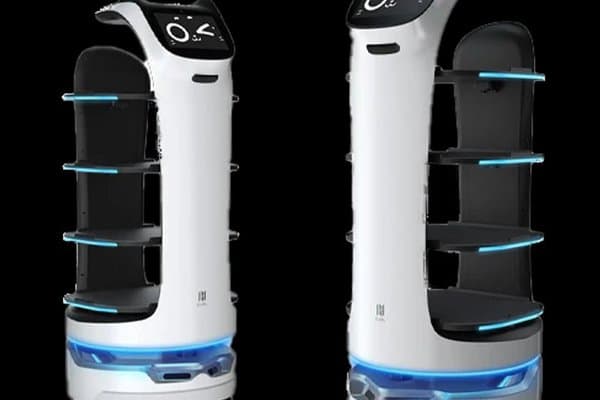
Delivery robots are now a common sight in restaurants, hotels, and hospitals worldwide. But the key question for business owners remains: do they actually save money?
The short answer is yes — most delivery robots pay for themselves within 6–12 months. Here's the detailed breakdown.
How Much Does a Delivery Robot Cost?
Purchase Price
| Robot | Price (FOB China) | Target Market |
|---|---|---|
| Pudu BellaBot | $4,000 – $6,000 | Restaurants |
| Pudu KettyBot | $3,500 – $5,000 | Restaurants, retail |
| Keenon T8 | $4,500 – $6,500 | Restaurants |
| Keenon W3 | $5,000 – $7,000 | Hotels, hospitals |
| OrionStar Lucki | $3,000 – $5,000 | Restaurants |
Note: Prices above are FOB China (factory price + delivery to port). Your landed cost will be higher after adding shipping, customs duties, and local taxes.
Total Landed Cost (Example: US Market)
| Cost Item | Amount |
|---|---|
| Robot FOB price | $5,000 |
| Sea freight | $300–500 |
| Import duty (HS 8428) | $0–250 (0–5%) |
| Customs broker fee | $150–300 |
| Local delivery | $100–200 |
| **Total landed cost** | **$5,550 – $6,250** |
Ongoing Costs
| Item | Annual Cost |
|---|---|
| Maintenance/parts | $200–500 |
| Software subscription | $0–600 (some brands charge, some don't) |
| Electricity | ~$50/year |
| **Total annual operating cost** | **$250–$1,150** |
ROI Analysis for Restaurants
Let's calculate the ROI for a typical mid-sized restaurant (80–120 seats).
Labor Cost Savings
A delivery robot doesn't replace a waiter entirely, but it handles the repetitive task of carrying food from kitchen to table. This typically allows a restaurant to:
- Reduce 1 server position per shift, or
- Handle 20–30% more tables without adding staff
Conservative estimate: 1 part-time server saved
| Market | Monthly Server Cost | Annual Savings |
|---|---|---|
| US | $2,500–3,500 | $30,000–42,000 |
| UK | $2,000–2,800 | $24,000–33,600 |
| UAE | $1,200–1,800 | $14,400–21,600 |
| SE Asia | $500–800 | $6,000–9,600 |
Revenue Increase
Delivery robots also generate additional revenue:
- Novelty factor: Especially cat-shaped robots like BellaBot attract social media attention and foot traffic
- Faster table turnover: Robot delivery is consistent and doesn't get busy or tired
- Upselling opportunity: Robots can display promotional messages on their screens
Restaurant owners report a 10–15% increase in customer visits during the first 3–6 months after deploying a delivery robot.
Payback Period Calculation
Scenario: US Restaurant
| Item | Amount |
|---|---|
| Robot landed cost | $6,000 |
| Annual operating cost | $600 |
| Annual labor savings | $30,000 |
| **Payback period** | **~2.5 months** |
Scenario: SE Asian Restaurant
| Item | Amount |
|---|---|
| Robot landed cost | $5,500 |
| Annual operating cost | $400 |
| Annual labor savings | $7,200 |
| **Payback period** | **~9 months** |
Even in the most conservative scenario with lower labor costs, the payback period is under 12 months.
ROI Analysis for Hotels
Hotel delivery robots (room service, amenity delivery) have a different ROI profile:
Use Cases
- Room service delivery (towels, toiletries, food)
- Welcome packages and amenity delivery
- Late-night autonomous delivery when staff is minimal
Cost Savings
- Reduces need for bellhop/room service staff during off-peak hours
- One robot can handle 30–50 deliveries per day
- Eliminates the need for after-hours room service staffing
Guest Experience Premium
- Hotels report higher guest satisfaction scores with robot delivery
- Robot delivery is a differentiator and marketing tool
- Guests frequently share robot interactions on social media
Lease vs. Buy
Some distributors offer leasing options:
| Option | Monthly Cost | Total (3 years) | Pros |
|---|---|---|---|
| Buy (from China) | — | $5,500–6,500 | Lowest total cost |
| Lease (local) | $300–500/mo | $10,800–18,000 | No upfront capital, includes maintenance |
| RaaS (Robot as a Service) | $500–800/mo | $18,000–28,800 | All-inclusive, swap-out if broken |
Buying directly from China is the most cost-effective option if you're comfortable with the import process.
Common Concerns
"Will it actually work in my restaurant?"
Modern delivery robots use LiDAR and camera-based navigation. They work well in:
- Restaurants with clear pathways (3+ feet wide)
- Flat floors (not suited for stairs)
- Multi-floor venues (with elevator integration)
"What about maintenance?"
Delivery robots are relatively low-maintenance:
- Daily: Charge the battery (2–3 hours for a full charge)
- Weekly: Clean the trays and sensors
- Quarterly: Check wheel wear, update software
- Annually: Replace battery if needed ($200–400)
"Do customers actually like them?"
Research shows 80%+ positive customer reactions. The robots are especially popular with families and younger demographics. Some restaurants report that customers specifically visit because of the robot.
How to Get Started
- Assess your space: Measure aisle widths and map the delivery route
- Choose the right model: BellaBot for restaurants, W3 for hotels
- Start with 1–2 robots: Test and optimize before scaling
- Train your staff: Robots work alongside humans, not instead of them
GrabaRobot can help you find the right delivery robot for your business and get quotes from verified manufacturers.