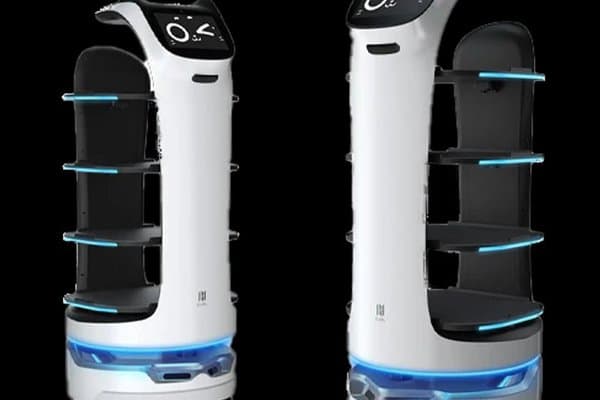
Hotel service robots have gone from a futuristic curiosity to a practical solution adopted by thousands of hotels worldwide. From room delivery and lobby greeting to housekeeping supply transport, robots are helping hotels improve guest satisfaction while reducing operational costs.
This guide covers the key use cases, leading products, integration requirements, and cost analysis to help hospitality managers make informed decisions.
Key Use Cases for Hotel Robots
1. Room Delivery
The most common hotel robot application. Robots deliver items such as towels, toiletries, bottled water, room service meals, and guest requests directly to rooms. The guest receives a call or app notification when the robot arrives, opens the compartment, and takes their items.
Impact: Reduces front desk and housekeeping workload by 30–40% for delivery tasks. Especially valuable during night shifts when staffing is minimal.
2. Lobby Greeting and Information
Robots stationed in the lobby can greet guests, provide directions, answer frequently asked questions, promote hotel amenities, and assist with basic check-in processes. These are typically equipped with screens, speakers, and multilingual support.
Impact: Creates a memorable first impression, reduces front desk congestion, and appeals to tech-savvy travelers.
3. Housekeeping Supply Transport
Robots carry linens, cleaning supplies, and amenities between housekeeping storage areas and guest room floors. Instead of housekeepers making multiple trips to the supply closet, the robot delivers a cart of supplies to each floor.
Impact: Housekeepers spend more time cleaning and less time walking. Hotels report a 15–25% improvement in room turnaround time.
4. Food and Beverage Delivery
Similar to restaurant delivery robots, hotel F&B robots transport meals from the kitchen to guest rooms, meeting rooms, or poolside areas. They follow mapped routes and can call elevators autonomously.
Impact: Enables 24/7 room service without dedicated night-shift staff.
Top Hotel Robot Brands
| Brand | Model | Primary Use | Price (FOB China) | Key Feature |
|---|---|---|---|---|
| Keenon | W3 | Room delivery | $5,000 – $7,000 | Large compartments, elevator integration |
| Keenon | T8 Pro | Multi-purpose | $4,500 – $6,500 | Modular trays, greeting function |
| Pudu | BellaBot Pro | F&B delivery | $4,500 – $6,500 | Expressive display, smooth navigation |
| Pudu | SwiftBot | Room delivery | $5,000 – $7,000 | Large capacity, secure compartment |
| OrionStar | Mini | Lobby greeting | $3,500 – $5,500 | AI voice interaction, multilingual |
| Yunji | Sail | Room delivery | $4,000 – $6,000 | Compact design, good for narrow corridors |
Keenon and Pudu dominate the hotel robot market. Keenon's W3 is specifically designed for hotel room delivery with large sealed compartments that keep items secure and hygienic during transport. Pudu's BellaBot line is more versatile, used in both restaurants and hotels.
Guest Experience Impact
Hotel robots are not just an operational tool — they significantly impact guest experience.
Guest Satisfaction Data
| Metric | Before Robot | After Robot | Change |
|---|---|---|---|
| Guest satisfaction score (delivery) | 4.1 / 5.0 | 4.6 / 5.0 | +12% |
| Average delivery time (amenities) | 12 – 18 minutes | 5 – 8 minutes | -55% |
| Social media mentions (monthly) | Baseline | +40 – 80% | Significant increase |
| Guest complaints (delivery-related) | Baseline | -60% | Major reduction |
| Repeat booking rate | Baseline | +5 – 10% | Notable improvement |
Key findings from hotel operators:
- Families and children are the most engaged demographic — robot delivery becomes a highlight of their stay
- Business travelers appreciate the speed and privacy of robot delivery, especially for late-night requests
- Social media exposure provides free marketing, with guests frequently posting robot interaction videos
Integration Requirements
Hotel robots need to integrate with several building systems to operate effectively.
Elevator Integration
This is the most critical integration. The robot must be able to call the elevator, select the correct floor, and navigate out on the destination floor — all autonomously.
| Integration Method | Description | Cost |
|---|---|---|
| IoT elevator module | Small device installed in elevator control panel | $1,000 – $3,000 per elevator |
| Cloud API integration | Works with smart elevator systems (Otis, Schindler, KONE) | $500 – $2,000 setup |
| Robot calls via phone | Robot dials a floor using the existing intercom (basic) | Minimal |
Most modern hotel robots from Keenon and Pudu come with elevator integration modules. Installation typically takes 1–2 days per elevator.
Property Management System (PMS) Integration
Connecting the robot to your PMS allows for features such as:
- Automatic delivery triggered by guest requests in the hotel app
- Room number verification for secure delivery
- Usage logging and analytics tied to guest profiles
- Automated guest messaging ("Your delivery is on its way")
Keenon and Pudu offer APIs that integrate with major PMS platforms including Opera (Oracle), Mews, Cloudbeds, and others. Custom integrations require 2–4 weeks of development.
Wi-Fi and Network
Robots require stable Wi-Fi coverage throughout the hotel, including elevators and corridors. Minimum requirements:
- 5 GHz band preferred for less interference
- Consistent coverage with no dead zones on robot routes
- Bandwidth: 2–5 Mbps per robot (for maps, telemetry, and camera feed)
Cost Analysis
Purchase and Setup Costs
| Item | Cost |
|---|---|
| Robot unit (Keenon W3 or equivalent, FOB) | $5,000 – $7,000 |
| Shipping and customs (to US/EU) | $500 – $1,000 |
| Elevator integration (per elevator) | $1,000 – $3,000 |
| PMS integration | $1,000 – $3,000 |
| Installation and mapping | $500 – $1,500 |
| **Total for 1 robot, 2 elevators** | **$9,000 – $16,500** |
Ongoing Costs
| Item | Annual Cost |
|---|---|
| Maintenance and parts | $300 – $800 |
| Software subscription | $0 – $600 |
| Electricity | ~$60/year |
| **Total annual cost** | **$360 – $1,460** |
ROI Calculation
| Hotel Size | Robots Deployed | Monthly Savings | Payback Period |
|---|---|---|---|
| Boutique (50 rooms) | 1 | $1,500 – $2,500 | 4 – 11 months |
| Mid-size (150 rooms) | 2 – 3 | $4,000 – $7,000 | 3 – 8 months |
| Large (300+ rooms) | 4 – 6 | $8,000 – $15,000 | 3 – 6 months |
Savings come from reduced late-night staffing, fewer housekeeping delivery trips, and operational efficiency gains. The marketing value (social media exposure, press coverage, guest loyalty) is additional and harder to quantify but consistently reported by hotel operators.
Implementation Guide for Hotels
Step 1: Assess Your Property (Week 1–2)
- Map robot routes from storage areas to all guest floors
- Check elevator compatibility for IoT integration
- Survey Wi-Fi coverage on all planned routes
- Identify the highest-impact use case (usually room delivery)
Step 2: Select and Order (Week 2–4)
- Compare Keenon W3, Pudu SwiftBot, and alternatives
- Request factory pricing through a sourcing partner
- Confirm elevator and PMS integration requirements
Step 3: Install and Configure (Week 5–7)
- Install elevator integration modules
- Map the hotel environment (robot learns the layout)
- Set up PMS integration and guest notification system
- Configure charging station location
Step 4: Train Staff and Launch (Week 7–8)
- Train front desk, housekeeping, and F&B staff
- Run a 1-week pilot with selected floors
- Collect guest feedback and adjust operations
- Full rollout across all floors
Total timeline: 6–8 weeks from decision to full deployment.
Frequently Asked Questions
"What if the robot gets stuck?"
Modern hotel robots have built-in obstacle avoidance and can navigate around most obstructions. If truly stuck, they send an alert to the front desk app. Staff can remotely guide or retrieve the robot. In practice, this happens rarely after the initial mapping period.
"Can the robot handle multiple floors?"
Yes. With elevator integration, robots navigate between all floors autonomously. A single Keenon W3 can serve a 20-story hotel.
"Do guests tip the robot?"
Some hotels have added a tipping option on the robot's screen that donates to charity — a nice touch that guests appreciate.
Get Started with Hotel Robots
GrabaRobot works with Keenon, Pudu, and other leading hotel robot manufacturers. We help hotels source robots at factory-direct pricing and provide guidance on integration and deployment.
Explore our delivery robot catalog, which includes models designed specifically for hotels.
Learn more about hotel-specific robot solutions on our dedicated page.
Ready to bring robot service to your hotel? Contact us for a free consultation and quote.