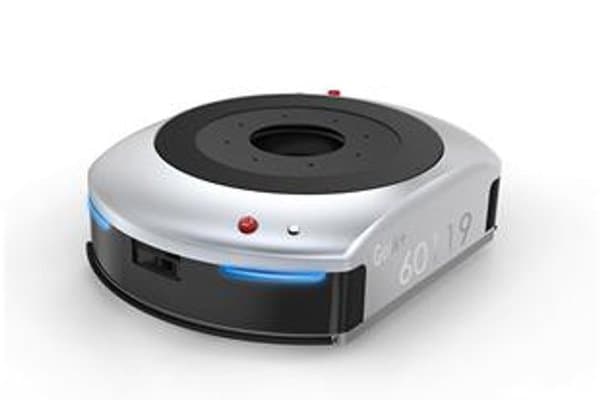
China has become the world's largest robotics market and the top manufacturing hub for commercial robots, industrial drones, and smart hardware. Whether you're a distributor, system integrator, or end user, buying directly from Chinese manufacturers can save you 30–60% compared to Western resellers.
This guide walks you through the entire process — from finding the right supplier to getting your robots delivered safely.
Why Source Robots from China?
China produces over 50% of the world's industrial robots and dominates several commercial robotics categories:
- Delivery robots: Pudu, Keenon, and OrionStar lead the global market for restaurant and hotel delivery robots
- Agricultural drones: DJI and XAG together hold over 80% of the global crop spraying drone market
- Robot dogs: Unitree and Deep Robotics offer quadruped robots at a fraction of Boston Dynamics' pricing
- Warehouse robots: Geek+, Hikrobot, and Quicktron power fulfillment centers worldwide
Key advantages include lower manufacturing costs, rapid iteration cycles, and a mature supply chain for components like motors, sensors, and batteries.
Step 1: Define Your Requirements
Before contacting any supplier, document exactly what you need:
- Application: What will the robot do? (e.g., food delivery in restaurants, warehouse picking, solar panel cleaning)
- Environment: Indoor or outdoor? Temperature range? Floor type?
- Volume: How many units do you need? MOQ matters for pricing
- Budget: What's your target landed cost per unit?
- Certifications: Do you need CE, FCC, UL, or other certifications for your market?
- Timeline: When do you need delivery?
Having clear requirements helps suppliers give you accurate quotes and avoids wasted time.
Step 2: Find and Vet Suppliers
Where to Find Suppliers
- Industry exhibitions: Canton Fair, World Robot Conference (Beijing), CES Asia
- Online platforms: Alibaba, Made-in-China, Global Sources
- Direct outreach: Visit manufacturer websites and request quotes
- Sourcing platforms: GrabaRobot connects you directly with verified Chinese robot manufacturers
How to Vet Suppliers
- Company age and size: Look for manufacturers with 5+ years of history and 50+ employees
- Factory audit: Request photos/videos of the production line, or hire a third-party inspection company
- Customer references: Ask for case studies or references from buyers in your region
- Certifications: Verify ISO 9001, CE, and product-specific certifications
- R&D capability: Do they have their own engineering team, or are they just assemblers?
Step 3: Request Quotes and Negotiate
Getting Accurate Quotes
When requesting quotes, provide:
- Exact product model or detailed specifications
- Order quantity (pricing tiers usually start at 1, 5, 10, 50, 100+ units)
- Destination country and port
- Required certifications
- Customization needs (branding, software, accessories)
Pricing Structure
Typical robot pricing from China includes:
- EXW (Ex Works): Factory gate price, you handle all shipping
- FOB (Free On Board): Price includes delivery to the Chinese port
- CIF (Cost, Insurance, Freight): Price includes shipping to your port
Most buyers start with FOB pricing for comparison, then negotiate CIF for the final order.
Negotiation Tips
- Get quotes from 3–5 suppliers for the same product to understand market pricing
- Larger orders get better per-unit pricing — ask for tiered pricing
- Don't just negotiate on price — negotiate on payment terms, warranty, and after-sales support
- Standard payment terms: 30% deposit via T/T, 70% before shipment
Step 4: Quality Assurance
Quality control is critical when importing robots. Here's your QA checklist:
Before Production
- Sign a detailed purchase agreement specifying all technical requirements
- Request a production sample for testing (especially for first orders)
- Agree on quality inspection standards and acceptance criteria
During Production
- Request progress photos and videos at key milestones
- Consider hiring a third-party inspection company (SGS, Bureau Veritas, TÜV) for a pre-shipment inspection
Before Shipment
- Conduct a final inspection: visual check, functional test, safety test
- Verify all documentation: user manuals, CE/FCC certificates, warranty cards
- Check packaging is adequate for international shipping
Step 5: Shipping and Logistics
Shipping Options
| Method | Transit Time | Best For |
|---|---|---|
| Sea freight | 20–35 days | Large/heavy shipments, cost-sensitive |
| Air freight | 5–10 days | Urgent orders, lightweight robots |
| Express (DHL/FedEx) | 3–7 days | Samples, small parts |
| Rail freight | 15–20 days | Europe-bound shipments |
Customs and Import Duties
- HS codes: Robots typically fall under HS 8479 or 8428 — check the exact code for your product
- Import duties: Vary by country (US: 0–25%, EU: 0–6.5%, depending on the product type)
- Customs broker: Hire a licensed customs broker in your country to handle clearance
- Documentation needed: Commercial invoice, packing list, bill of lading, certificate of origin, CE/FCC certificates
Step 6: After-Sales and Support
Before placing your order, clarify these after-sales terms:
- Warranty period: Standard is 12 months for most commercial robots
- Spare parts availability: Can you order spare parts separately? What's the lead time?
- Technical support: Do they offer remote troubleshooting? In what time zone?
- Software updates: Are firmware/software updates included? For how long?
- On-site service: Do they have service partners in your region?
Common Mistakes to Avoid
- Choosing the cheapest supplier: Low price often means low quality. Focus on value, not just cost
- Skipping the sample order: Always test before committing to a bulk order
- Ignoring certifications: Selling uncertified robots can lead to legal issues and customs seizure
- Poor communication: Use clear, written specifications. Don't rely on verbal agreements
- Not planning for customs: Factor in import duties, taxes, and customs broker fees into your total landed cost
Ready to Start Sourcing?
GrabaRobot helps international buyers connect directly with verified Chinese robot manufacturers. Browse our categories, compare products and prices, and request free quotes — all in one place.