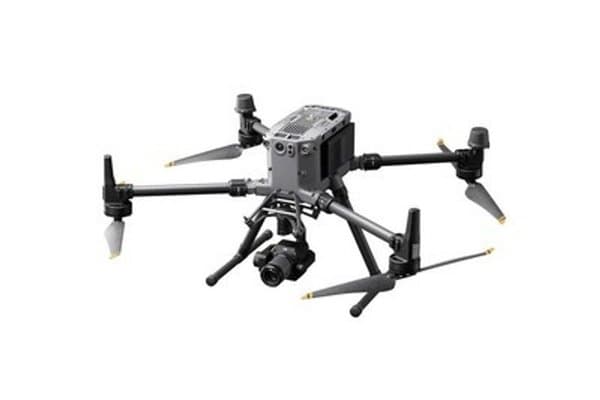
Industrial drones have become essential tools for infrastructure inspection, reducing costs by 50-70% while improving safety and data quality. Chinese manufacturers — led by DJI with over 70% global market share — offer the most capable and affordable inspection drones available.
This guide covers key applications, ROI analysis, and practical buying advice for industrial drone programs.
Top Inspection Applications
Power Line & Transmission Tower Inspection
Drones inspect power lines 5-10x faster than manual climbing, eliminating the need to de-energize circuits. Thermal cameras detect hot spots indicating failing components, while zoom cameras identify physical damage.
Recommended: DJI Matrice 350 RTK with H20T payload ($10,000 - $15,000)
Building & Facade Inspection
Drones replace scaffolding and rope access for building inspections. A single drone flight can capture the exterior of a 20-story building in 30 minutes versus days of manual inspection.
Recommended: DJI Mavic 3 Enterprise ($4,000 - $6,500) or Matrice 350 ($8,000 - $12,000)
Solar Farm Inspection
Thermal drones identify failing solar panels by detecting temperature anomalies. A drone can inspect a 1MW solar farm in 15 minutes — a task that takes a team of technicians an entire day.
Recommended: DJI Mavic 3 Enterprise Thermal ($5,000 - $6,500)
Pipeline & Oil & Gas
Drones monitor pipeline routes, detect methane leaks, and inspect offshore platforms. Fixed-wing VTOL drones cover long pipeline corridors efficiently.
Recommended: JOUAV CW-25E ($50,000 - $80,000) for long-range, DJI Matrice 350 for detailed inspection
Bridge & Infrastructure
Drones access bridge undersides, dam faces, and other structures that are dangerous for human inspectors. LiDAR-equipped drones create 3D models for structural analysis.
Recommended: DJI Matrice 350 with LiDAR ($15,000 - $25,000 total)
ROI Analysis
Here's a realistic ROI calculation for a power utility starting a drone inspection program.
| Item | Cost |
|---|---|
| DJI Matrice 350 RTK + sensors | $12,000 |
| Batteries (4x) | $2,400 |
| Software license (annual) | $2,000 |
| Pilot training & certification | $3,000 |
| **Total first-year investment** | **$19,400** |
| Savings | Amount |
|---|---|
| Reduced helicopter inspection hours | $40,000 - $80,000/year |
| Reduced outage time (no de-energization) | $20,000 - $50,000/year |
| Reduced scaffolding/rope access | $15,000 - $30,000/year |
| **Total annual savings** | **$75,000 - $160,000** |
Payback period: 2-4 months
This is why drone adoption in industrial inspection is growing at 30%+ annually.
Choosing the Right Industrial Drone
For Budget-Conscious Programs
Start with the DJI Mavic 3 Enterprise ($4,000 - $6,500). It handles 80% of common inspection tasks in a portable, easy-to-fly package. Add the thermal variant for temperature-based inspections.
For Professional Operations
The DJI Matrice 350 RTK ($8,000 - $12,000) is the industry standard. Its modular payload system supports visual, thermal, LiDAR, and multispectral sensors. RTK positioning provides survey-grade accuracy.
For Non-DJI Requirements
The Autel EVO Max 4T ($9,000 - $13,000) is the strongest DJI alternative, popular with organizations that prefer a non-DJI option for data security or regulatory reasons.
For Long-Range Missions
The JOUAV CW-25E ($50,000 - $80,000) covers 200+ km corridors with 2+ hours of flight time. Essential for pipeline monitoring, border patrol, and large-area surveying.
5 Steps to Start a Drone Inspection Program
- Get certified — most countries require commercial drone pilot certification (Part 107 in the US, A2 CofC in the EU)
- Start small — pilot with a Mavic 3 Enterprise before investing in a Matrice fleet
- Build workflows — standardize flight plans, data processing, and reporting
- Train your team — invest in both pilot skills and data analysis capabilities
- Scale gradually — add specialized sensors and larger platforms as your program matures