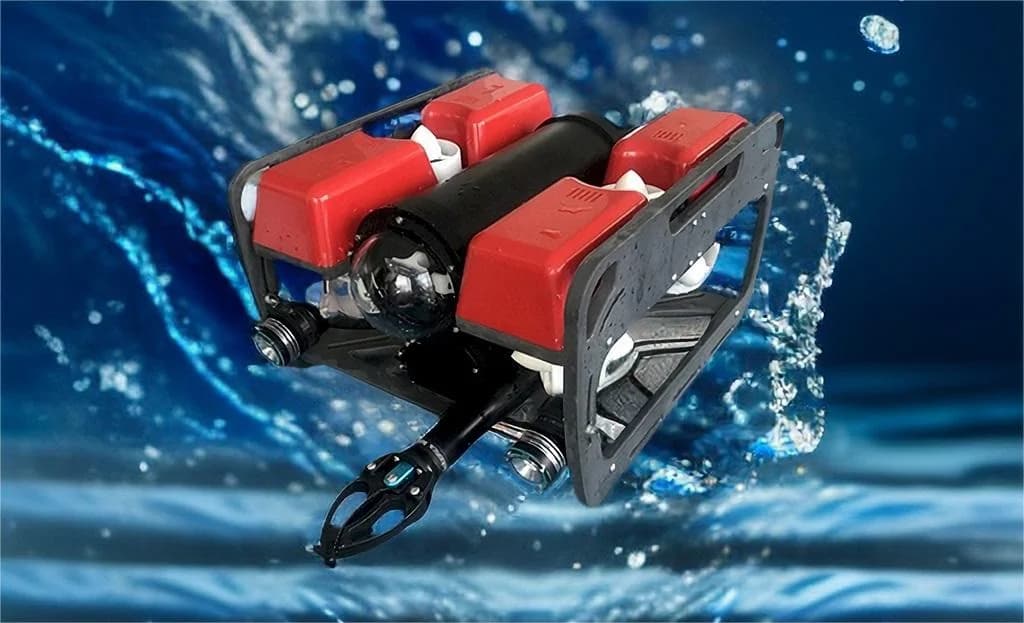
Chinese brands have made underwater exploration accessible to everyone. Where professional ROVs once cost $50,000-$500,000, you can now get a capable underwater drone for $1,200-$6,500 from brands like CHASING, Qysea, and Geneinno.
This guide covers the types, applications, and best models for 2026.
Types of Underwater Drones
Consumer ROVs ($1,200 - $2,000)
Compact, easy-to-use drones for recreational diving, fishing, and basic underwater photography. Depth rating: 100-150m.
Best option: CHASING Gladius Mini S ($1,200 - $1,800)
Prosumer ROVs ($3,000 - $7,000)
Professional-capable drones with modular accessories for inspection, aquaculture, and research. Depth rating: 150-200m.
Best options: CHASING M2 Pro ($3,500 - $5,500), Qysea FIFISH V6 Expert ($4,000 - $6,500)
Specialized ROVs ($10,000+)
Purpose-built platforms for specific applications like biomimetic research or deep-sea operations.
Example: Robosea ROBO-SHARK ($15,000 - $50,000)
Key Applications
Hull & Infrastructure Inspection
Ship hull inspection, bridge pier assessment, and dam monitoring. Drones eliminate the need for divers in dangerous conditions and provide recorded video for documentation.
Aquaculture Monitoring
Fish farm operators use underwater drones to inspect nets, monitor fish health, and check feeding systems. A drone reduces the need for diver inspections by 80%.
Search & Rescue
Emergency services use underwater drones to search for submerged objects, victims, and evidence in low-visibility water. The tethered design ensures no risk of losing the drone.
Marine Research
Researchers study coral reefs, marine life, and underwater geology without disturbing ecosystems. The Robosea ROBO-SHARK's biomimetic design minimizes disturbance to marine life.
Recreational Use
Underwater photography, fishing scouting, and dive site exploration. Consumer drones capture stunning 4K footage at depths recreational divers can't reach.
Feature Comparison
| Feature | Gladius Mini S | Geneinno Titan | CHASING M2 Pro | FIFISH V6 Expert |
|---|---|---|---|---|
| Price | $1,200-$1,800 | $2,500-$4,000 | $3,500-$5,500 | $4,000-$6,500 |
| Depth | 100m | 150m | 200m | 200m |
| Camera | 4K | 4K | 4K | 4K |
| Thrusters | 5 | 4 | 8 | 6 |
| Battery | 2 hrs | 3 hrs | 4 hrs | 3 hrs |
| Weight | 4.2kg | 5.5kg | 6.5kg | 6.1kg |
| Robotic arm | No | No | Optional | Optional |
5 Buying Tips
- Start with depth requirements — if you only need 50m, don't pay for 200m capability
- Consider tether length — standard tether is 100-200m. Longer tethers ($200-$500) are available for deep operations
- Check lighting — built-in LED lumens vary from 2,000 to 6,000 lux. Brighter is better for murky water
- Think about accessories — robotic arms, laser scalers, and water samplers add capability but also cost
- Test in your environment — water clarity, temperature, and current conditions vary. Test before committing to a fleet