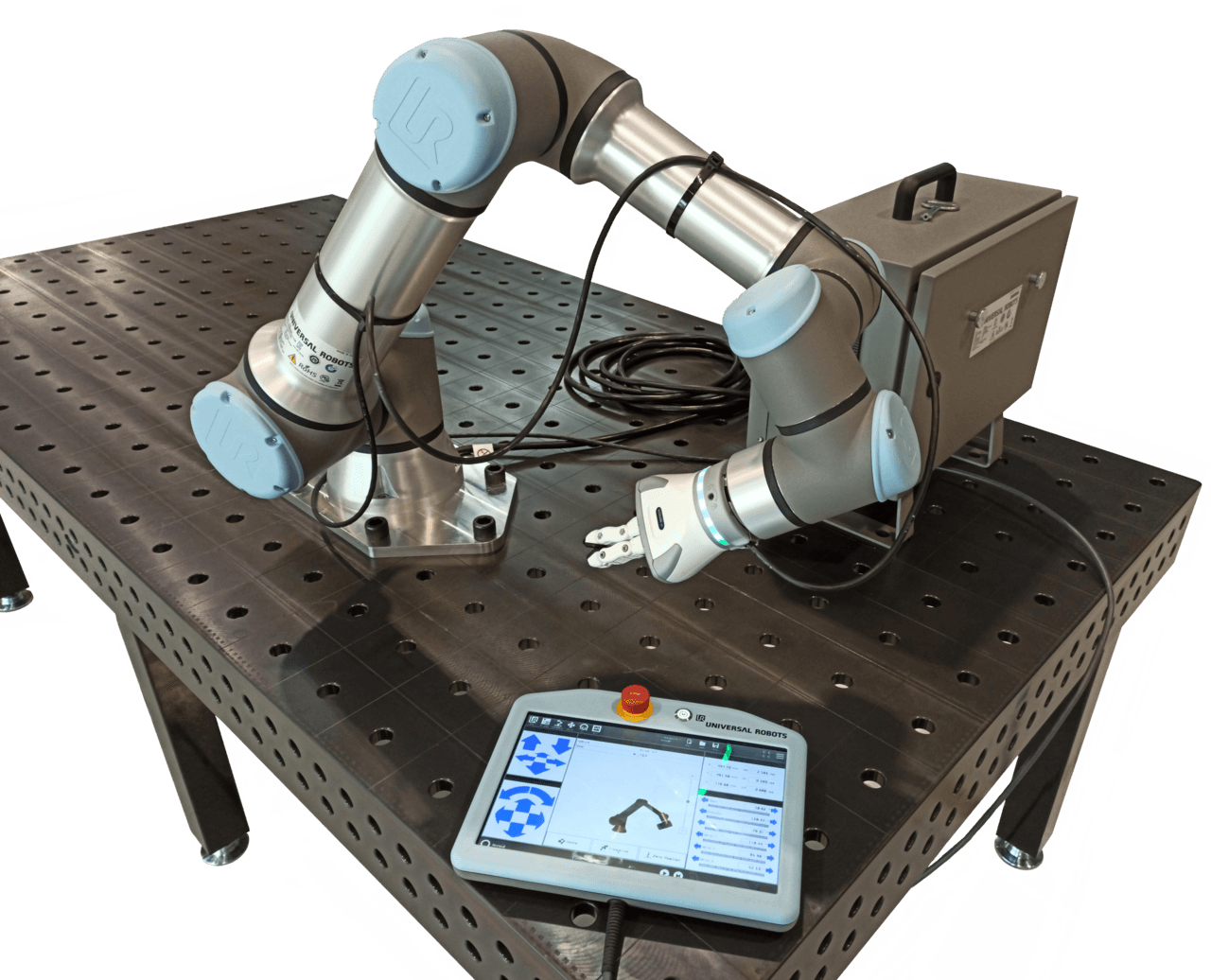
The global collaborative robot market has reached $3.74 billion in 2026, up from $3.06 billion in 2025, according to new analysis from Coherent Market Insights. The 22.14% year-over-year growth rate, sustained across a compound annual growth rate projection through 2035, places cobots among the fastest-growing segments of the broader industrial automation market.
Segment Breakdown: Assembly Leads, Heavy Payload Growing Fastest
The assembly application segment commands the largest share of the cobot market, accounting for more than 23% of global revenue. Assembly automation is the canonical cobot use case: tasks requiring precise, repeatable motion in proximity to human workers, where the flexibility and force-limiting safety features of collaborative robots deliver the most direct productivity gains over manual labor.
By payload category, cobots carrying more than 10 kilograms are the fastest-growing segment, posting a 24.3% compound annual growth rate. This reflects the expanding scope of cobot applications beyond light assembly and inspection into heavier material handling, machine tending, and palletizing tasks that were previously the domain of conventional industrial robots requiring dedicated safety guarding.
The above-10kg growth rate also reflects market maturation. As cobot deployments have accumulated across early-adopter customers in electronics and automotive, procurement teams have gained the confidence to specify higher-payload systems for more demanding applications.
AI and IoT Are Changing the Programming Paradigm
One of the most commercially significant developments in the cobot market is the integration of AI and IoT capabilities that are enabling natural language programming interfaces. Siemens has demonstrated a Copilot integration with Universal Robots and FANUC platforms that allows operators to describe robot tasks in plain language and have the system generate motion programs automatically, without specialist robotics programming knowledge.
This capability directly attacks the most persistent barrier to cobot adoption among small and medium manufacturers: the need for programming expertise that many SMEs do not have in-house and cannot justify hiring for. If natural language programming matures to the point where a production supervisor can redeploy a cobot to a new task without outside support, the total cost of ownership equation improves substantially.
Sector Penetration: Electronics and Automotive Lead
Approximately 70% of electronics and automotive production facilities globally have integrated cobots into at least some production processes, according to market research data. These sectors have been the primary drivers of cobot adoption since Universal Robots commercialized the category in the early 2010s, and they continue to expand their deployments as payload capabilities and AI-assisted programming reduce deployment friction.
Growth in adjacent sectors — food and beverage, pharmaceuticals, logistics, and general manufacturing — is accelerating as cobot technology becomes more accessible and as more integrators develop sector-specific application packages that reduce customization work for end users.
Competitive Landscape
Universal Robots (Teradyne) and FANUC remain the market share leaders globally, but the competitive field has expanded significantly. OMRON, ABB, Doosan Robotics, and a growing roster of Chinese manufacturers including Aubo Robotics and Elite Robots are competing aggressively on price and specification. Chinese manufacturers in particular are narrowing the gap with Western incumbents on technical performance while offering substantially lower list prices.
What This Means for Robot Buyers
The 22% annual market growth rate means that the collaborative robots vendor landscape is expanding and competitive pressures are driving down prices. Buyers have more options and more leverage than at any previous point in the category's history. Companies evaluating their first cobot deployment should benchmark multiple vendors across total cost of ownership, ease of programming, payload-to-price ratio, and local integration support. For buyers at scale, sourcing directly from Chinese manufacturers through buy from China channels can yield 30–50% lower per-unit costs compared to Western equivalents with comparable technical specifications.