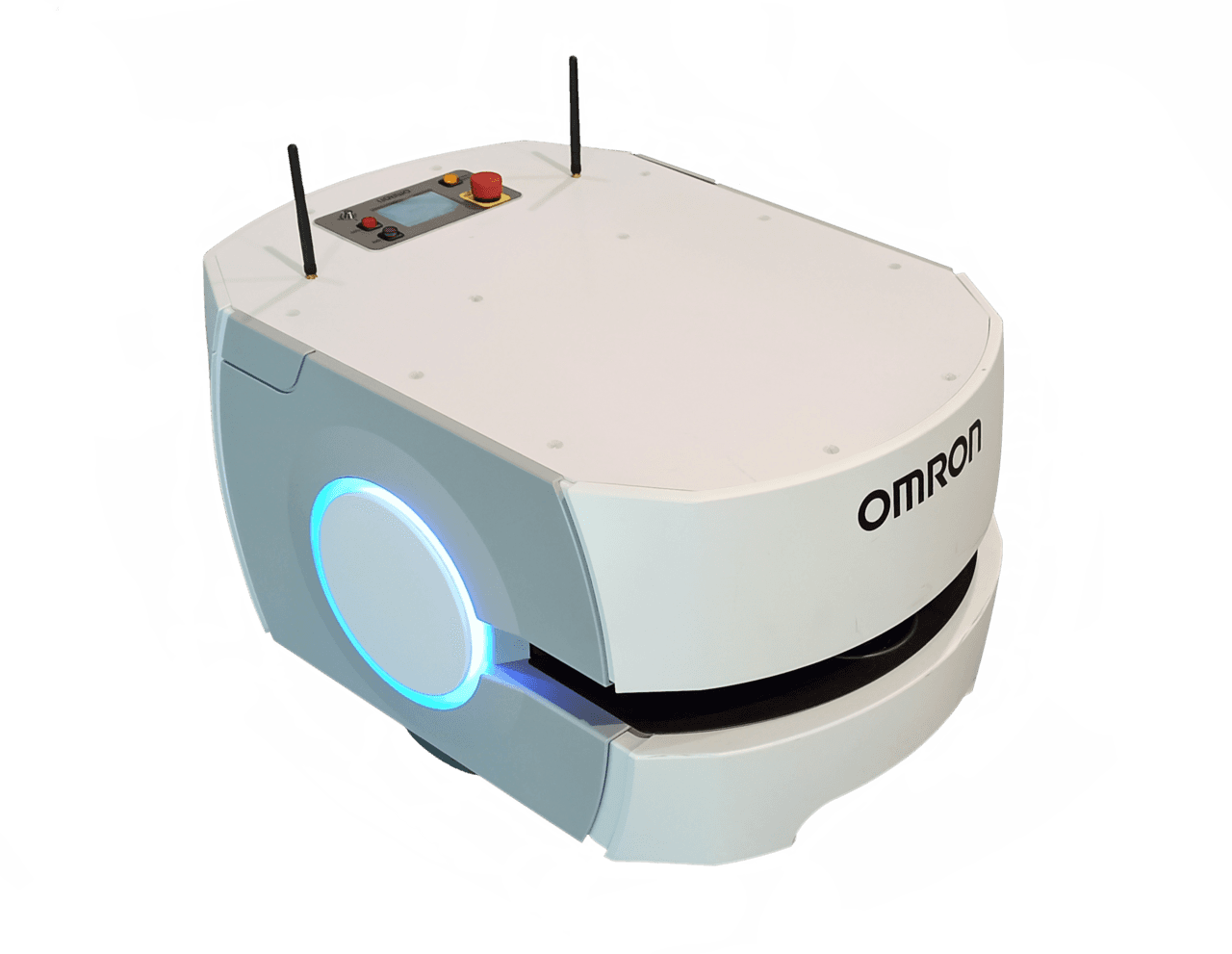
OMRON Robotics used MODEX 2026 in Atlanta to introduce the OL-450S, a new low-clearance autonomous mobile robot designed for autonomous cart transport in warehouse and distribution environments. The OL-450S joins OMRON's expanding next-generation AMR lineup and reflects the company's push to address the last-meter material handling challenge that cart-based workflows present.
Designed for the Cart Transport Problem
Cart transport is one of the most common and labor-intensive tasks in warehouse operations. Workers spend a disproportionate share of their shift moving loaded carts between staging areas, packing stations, and dispatch zones — work that requires minimal skill but significant physical effort and time. The OL-450S targets this specific workflow with a form factor optimized to slide beneath standard warehouse carts without requiring any modification to existing cart inventory.
The low-clearance design is the defining hardware feature. By keeping its body profile close to the floor, the OL-450S can engage with carts that traditional AMR platforms cannot reach, expanding the range of cart types and environments where autonomous transport is feasible. Once engaged, the robot lifts the cart and navigates autonomously to the designated drop point, freeing workers for higher-value tasks.
OMRON has not yet published full payload and speed specifications for the OL-450S, but the platform sits within the company's broader OL series architecture, which emphasizes fleet management integration through OMRON's Fleet Manager software. This allows OL-450S units to operate alongside other OMRON AMR models in shared spaces without lane segregation.
MODEX 2026: AMRs Dominate the Intralogistics Floor
OMRON's announcement came amid a packed MODEX show floor where AMRs of every configuration competed for attention from procurement and operations teams. The Atlanta exhibition, held every two years, is one of the primary venues where North American logistics operators evaluate new automation investments. This year, the trend toward lower-cost, easier-to-deploy AMRs was unmistakable.
Vendors across the show emphasized rapid deployment timelines — some claiming facilities can be operational with an AMR fleet in under two weeks — and flexible commercial models that reduce up-front capital commitment. OMRON's presence, featuring both the OL-450S debut and demonstrations of its established mobile robot portfolio, reinforced the company's position as one of the few vendors offering integrated solutions spanning AMRs, collaborative robot arms, and machine vision in a single ecosystem.
Fleet Intelligence Remains the Differentiator
For buyers evaluating the OL-450S or competing cart-transport AMRs, the hardware specs matter less than the fleet management software. The ability to dynamically assign tasks, manage traffic in congested aisles, handle exceptions such as blocked routes or cart misalignment, and integrate with warehouse management systems determines whether a fleet actually delivers the promised throughput gains.
OMRON's Fleet Manager has been tested across a range of distribution environments, and the company's experience with multi-robot deployments gives it a credible track record in this respect. That said, buyers should validate fleet software performance under peak-season conditions before committing to large-scale rollout.
What This Means for Robot Buyers
The OL-450S expands the viable use cases for warehouse robots in facilities where cart transport represents a significant labor cost. Operations managers evaluating cart automation should compare the OL-450S against competing platforms from MiR, Zebra, and Chinese manufacturers, paying particular attention to cart compatibility and fleet software capabilities. For buyers interested in sourcing AMR platforms at scale, options to buy from China continue to expand as domestic manufacturers mature their cart-transport AMR product lines.