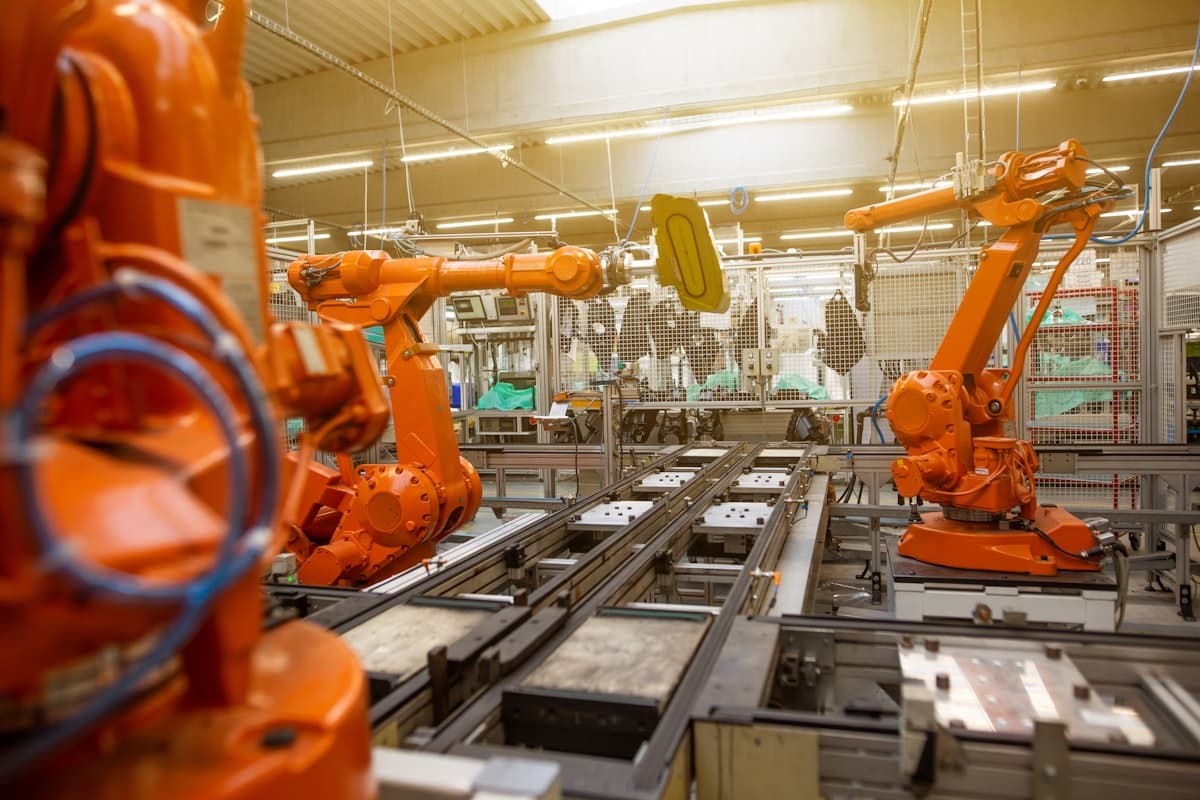
RoboForce, a physical AI company focused on deploying robot workers in manufacturing settings, raised $52 million in new funding in March 2026. The company's model — providing robot workers as a managed service rather than selling hardware — is gaining traction as manufacturers seek labor flexibility without capital commitment.
What RoboForce Does
RoboForce operates on a Robot-as-a-Service (RaaS) model: the company deploys, operates, and maintains robot workers in customer facilities. Customers pay per unit of work performed rather than purchasing or leasing equipment. This model shifts the capital and operational risk from the customer to RoboForce, lowering the barrier to adoption.
The company specifically targets manufacturing applications where AI-driven adaptability is required — tasks that are repetitive enough for robots but variable enough to have resisted traditional automation. RoboForce's physical AI approach uses continuous learning to improve robot performance on the deployed task over time.
Why the RaaS Model Is Gaining Ground
Traditional robot procurement requires capital expenditure, integration engineering, and ongoing maintenance capability. For manufacturers trying out automation for the first time, or for facilities with variable production volumes, these requirements are significant barriers.
RaaS eliminates the upfront capital requirement and transfers operational responsibility to the vendor. The trade-off: higher per-unit cost over time compared to ownership. The model works economically when:
- Customer capital is constrained
- Production volumes are variable (paying per unit of work scales with actual utilization)
- Technology change risk is high (RaaS allows upgrades to newer robots without stranded asset costs)
Physical AI: The Technology Bet
RoboForce's 'physical AI' positioning is shared with several other 2026 robotics companies (NVIDIA's physical AI infrastructure push, Apptronik's AI-enhanced Apollo). The bet is that AI models trained on physical interaction data will generalize across tasks in ways that traditional robot programming cannot.
NVIDIA's investment in physical AI infrastructure — including the Isaac robotics platform and partnerships with multiple robot manufacturers — provides ecosystem support for this approach. The combination of NVIDIA's compute and training infrastructure with RoboForce's deployment and operations capability represents a vertically integrated physical AI play.
Competitive Landscape
RoboForce competes in the RaaS space with established players (6 River Systems, Locus Robotics for logistics) and emerging ones (Machina Labs, Dexterity, Plus One Robotics). The manufacturing focus differentiates it from logistics-centric RaaS providers.
What This Means for Robot Buyers
For manufacturers evaluating automation options, the growth of physical AI RaaS providers adds a third option alongside outright purchase and traditional equipment leasing. The key questions for RaaS evaluation: What is the per-unit-of-work cost versus current labor cost? What is the SLA for uptime? What happens to production if the RaaS provider has issues?
For near-term procurement with established ROI profiles, collaborative robots with direct purchase or traditional lease remain the lower-risk path. Monitor RoboForce and similar companies as the physical AI model matures. The robot ROI calculator can help compare RaaS versus purchase economics for your specific scenario.